
Libtard Intifada
Lessons from French Counterinsurgency for the Right

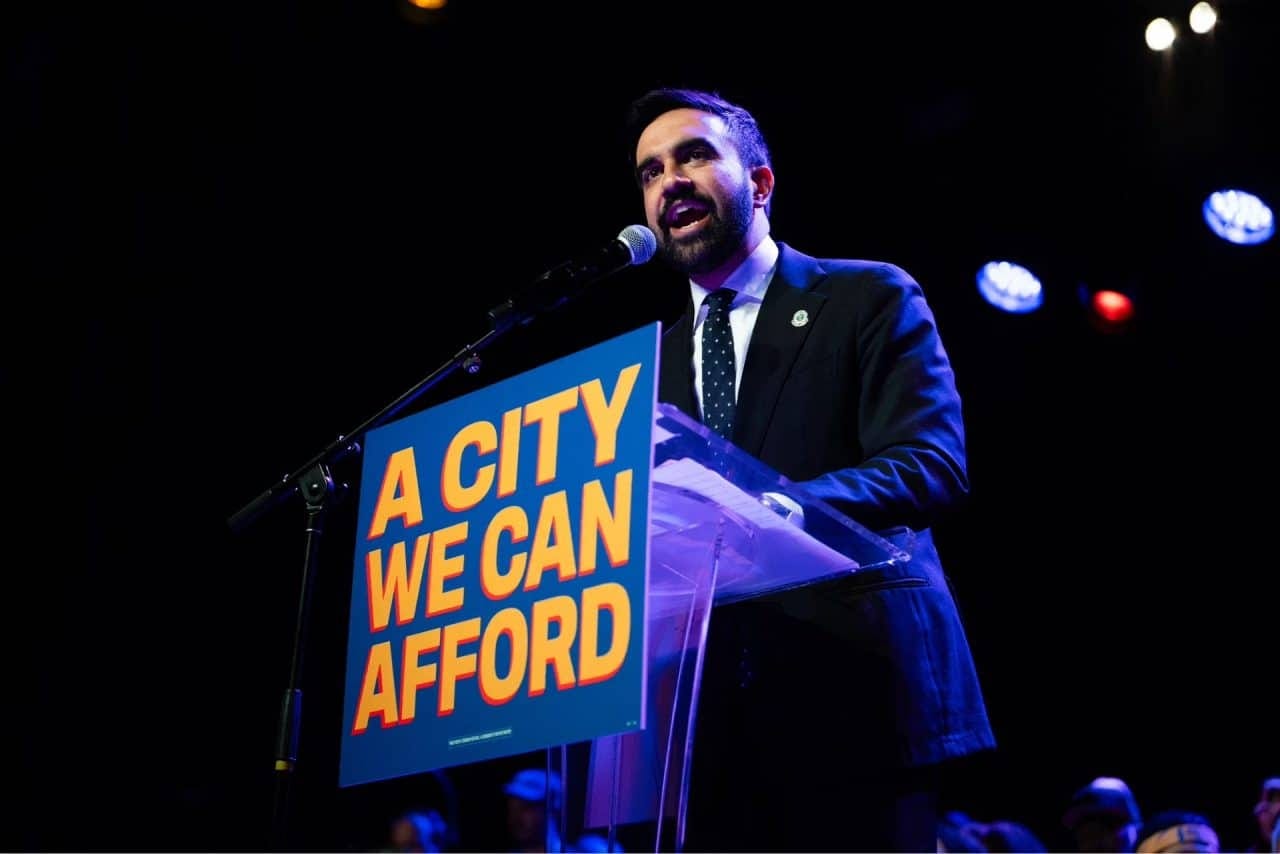
An interesting debate has emerged on the Right surrounding the candidacy and election of Zohran Mamdani. It goes something like this: some commentator, usually a Boomer or else a GWOT veteran, will point out that Mamdani is a Muslim, supporter by Muslim immigrants, and seems to be a Hamas sympathizer who poses with Al Qaeda terrorists. “Zohran is going to impose Sharia law on New York City!” these types will say.
Younger generations of the online Right scoff at this. “OK Boomer,” they respond. “It isn’t 2001 anymore. Mamdani isn’t Bin Laden 2.0, he’s just a typical Millennial lib.” They point out his connection to Democratic Socialist of America and such darlings of campus progressivism as Bernie Sanders and Alexandria Ocasio-Cortes. Former Alt-Right influencer (and now Biden-supporting edgelord) Richard Spencer even questioned whether Mamdani is anything different from any ethnic Millenial:

Islamist terrorism, these Zoomers contend, is not a real threat, just a bugaboo for Neocons, Zionists, and VetBros; Mamdani is just a run of the mill progressive.
The problem is, when you dig into the history of the second half of the twentieth century, an uncomfortable fact emerges: Islamism and Communism have always been a) allies, and b) indistinguishable from campus leftism. Put another way: was Bin Laden just another libtard?
To explore this concept, I turn towards one of the most prolific anti-Communist and anti-Islamist warriors of the last century, Roger Trinquier. As a soldier, a leading theorist of counterinsurgency, and a man of the Right, Trinquier offers key lessons in understanding the nexus of third world and leftist violence America faces.
Roger Trinquier: The Last Crusader
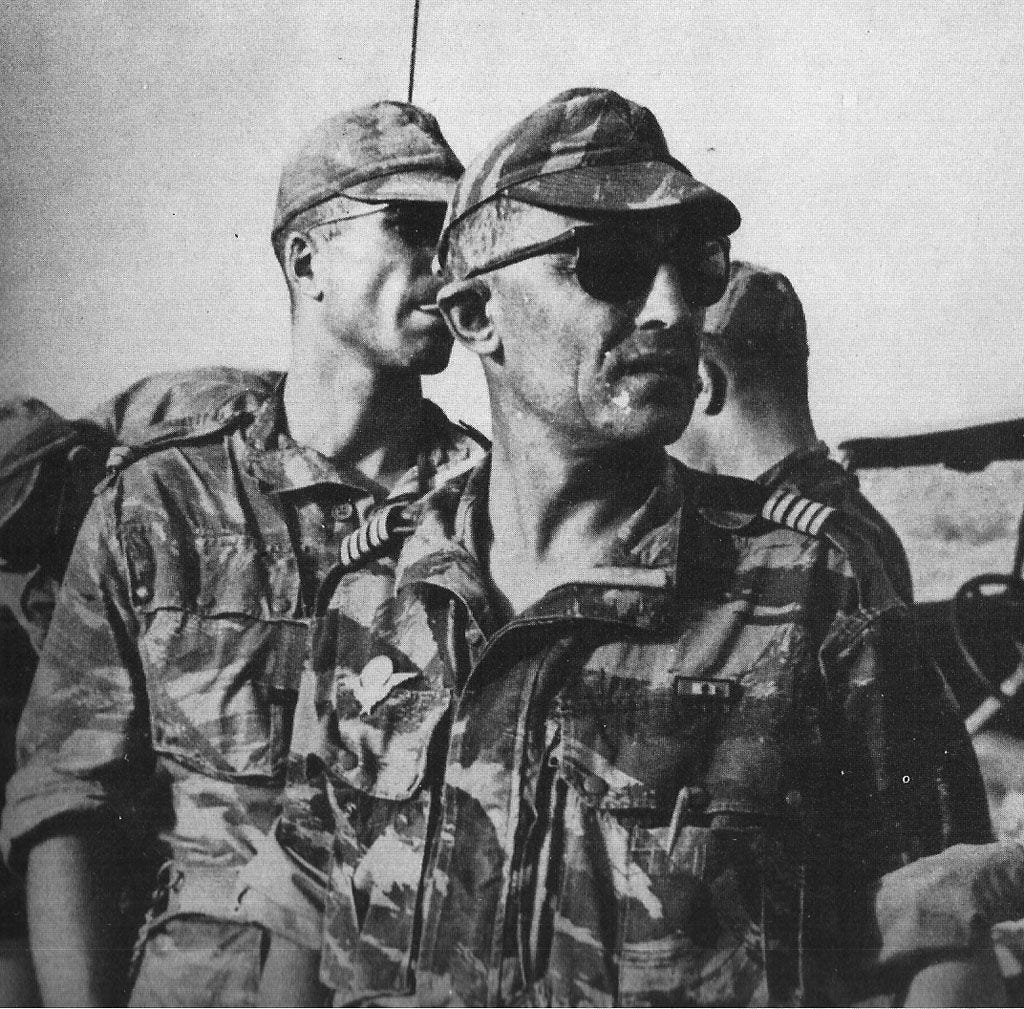
Roger Trinquier, one of the great adventurers and soldiers of the French Empire, was born in 1908. In 1933 he commissioned as a lieutenant in the colonial infantry, serving several tours in Indochina (now Vietnam) and the French-controlled areas of China. When the French Republic fell in 1940, he commanded the French expeditionary force in Shanghai, now left in limbo without a clear government and caught in the middle of a three-way war between Soviet-backed Communists, the U.S.-backed Kuomintang, and the Imperial Japanese, nominal allies of Marshall Petain’s Vichy government.
After the war, Trinquier returned to Indochina to fight the Vietminh, under the command of the charismatic Communist Ho Chi Minh. In 1951, he returned for a third tour in Indochina leading an Airborne Commando unit behind Communist lines. It was during this time that he discovered the writings of Mao Tse-Tung, and his theory of revolutionary warfare began to take shape.
After the French defeat at Dien Bien Phu in 1954, Trinquier returned to France, but by 1956 he was putting his new theories into practice in another colony: Algeria.
The Algerian War stands as one of the most important conflicts in the history of the postwar order, decolonization, and modern warfare, yet has been largely forgotten. When the war began, the French Empire had included Algeria for 124 years; France had incorporated the territory as a department of the nation in 1848, earlier than twenty U.S. states.
In the context of Cold War Communist expansion and widespread decolonization, the French would make their last stand in Algeria. By its end, the war left one million Algerians dead and another million Europeans, most of whom were born in Algeria, expelled from their homes.
In the process, the terrorist National Liberation Front (F.L.N.) carried out indiscriminate bombings, massacres of the country’s white inhabitants, and reprisals against other Algerians who failed to adhere to Islamic law or the F.L.N.’s political priorities. The French withdrawal from Algeria marked the effective end of European colonialism, and within decades the last remnants of colonial rule had disappeared in Africa and the Middle East.
Trinquier, for his part, served as the chief Intelligence Officer for the elite French paratroopers (“paras”) during their greatest military success, the Battle of Algiers. Modern strategists and commanders such as Generals David Petraeus and Stanley McChrystal have treated the battle, as depicted in Jean Lartéguy’s novel The Centurions (1960) and Gillo Pontecorvo’s movie The Battle of Algiers (1966), as a cautionary tale of violent excess. However, the paratrooper strategy brought battlefield success, pacifying the capital city of Algiers within eight months; the ultimate French defeat came, not on the battlefield, but in political boardrooms and in the press.
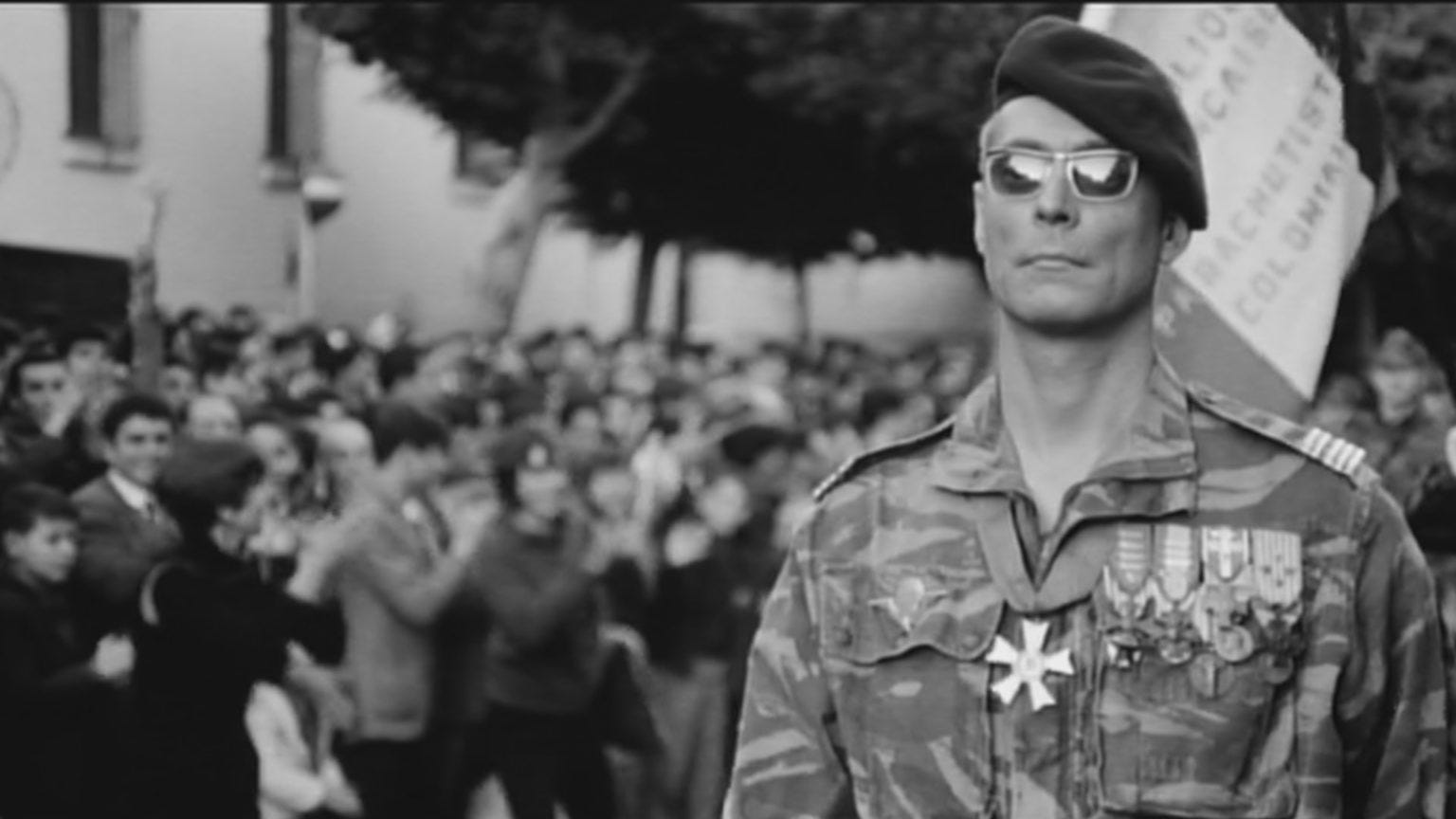
When Trinquier retired from the French army in 1961, he continued his life of adventure and crusade against Communism. He worked as a mercenary in the Congo, training the forces of the pro-Western Moise Tshombe in Katanga against the Afro-Marxist dictator (and international leftist darling) Patrice Lumumba. He also traveled to Argentina on behalf of the Traditional Catholic organization Cité Catholique, training military and law enforcement officers in intelligence collection and interrogation techniques during the so-called “Dirty War” of the 1970s. Finally, he retired to a vineyard in southern France before his death in 1986.
His life alone could make a series of movies, but the most enduring contribution Trinquier made to civilization is his theory of “revolutionary warfare”: the ultimate guidebook for crushing violent libtards anywhere in the world.
How to Fight a Revolutionary War
Trinquier defined “revolutionary war” as “an interlocking system of actions—political, economic, psychological, military—that aims at the overthrow of the established authority in a country and its replacement by another regime.” The basic tactic of this kind of war, he believed, is terrorism, defined as attacks against civilian targets in order to cause individuals to feel isolated and unsafe. The combination of political ideology and terrorist tactics, Trinquier argued, differentiates revolutionary warfare from earlier irregular warfare.
A revolutionary war unfolds in a sequence of steps: 1) the formation of a party, 2) the development of a united revolutionary front against the existing regime, 3) a gradual escalation of tensions through terrorism, 4) guerilla warfare, 5) conventional warfare, and 6) a war of annihilation against the losing side. This process described not just the war in Indochina, but similar colonial wars throughout Asia, Africa, the Middle East, and Latin America in the late 20th century.
Trinquier instructed counterinsurgents to “carry the war to the enemy and grant them no respite until they capitulate. We will attack them on their terrain with weapons of modern warfare that will permit us to strike directly.” He did not see a difference in the strategic principles of conventional war and counterinsurgency, recognizing the universal importance of initiative and force. As he wrote, “In modern warfare, as in the traditional wars of the past, it is absolutely essential to make use of all the weapons the enemy employs. Not to do so would be absurd.” Trinquier did not shrink from the realities of aggressive war: “Intelligence and ruse, allied to physical brutality, will succeed the power of blind armament.”
Where many modern COIN theorists focus on winning over the population through political efforts, Trinquier and the paratroopers prioritized tearing out the insurgent organization by the roots with swift, decisive action. Lacking liberal faith in democratic processes in the French colonies, Trinquier noted that “We know that it is not at all necessary to have the sympathy of a majority of the people in order to rule them. The right organization can turn the trick.”
This recognition simplified the strategic goals for the paratroopers; rather than spending years with hundreds of thousands of troops to pacify an entire region and win over its people, the paras could target and destroy the terrorist organization at the heart of the insurgency, neutralizing the threat. For Trinquier, “Victory will be obtained only through the complete destruction of that organization. This is the master concept that must guide us in our study of modern warfare.” In the paratrooper model, eliminating the insurgent organization would render the population’s opinions moot; winning over the people becomes unnecessary once no enemy organization exists.
Libtard Terrorism: From Mao to Bin Laden to Harvard
Many commentators have observed, correctly, that modern Leftism no longer focuses on orthodox Marxist economics or historical materialism. The mainstream narrative is that American leftists in the 1960s, such as Herbert Marcuse, seeing the economic failures of the Soviet Union, pivoted to other issues, like “racial justice,” feminism, or gay liberation.
This narrative misses the real history of Communist revolutions. As early as the 1930s, Chinese Communism had already deviated from the Marxist narrative. Without industrialization, China lacked an urban proletariat, a bourgeoise, and all of the other prerequisites for a Communist revolutions. Luckily for Mao Tse-Tung, Communists never let logical consistency get in the way of a good revolution: he just needed to change the framing.
The new enemy, for Mao, was not Capitalism as such, but “Imperialism,” a new catch-all for the interests of the West, the established order, and civilization itself. It could apply equally to the Japanese Greater East-Asian Co-Prosperity Sphere, the U.S.-backed Kuomintang, or U.N. forces in Korea. It could also be exported to the rest of the undeveloped world, allying Communism with Third-World nationalism.
Mao’s greatest protege, Ho Chi Minh, brought the new anti-imperialist revolutionary doctrine to full completion in French Indochina. With backing from Stalin, Mao, and the United States (but more on that in a future article) and armed with Mao’s Guerilla Warfare (1937), Ho’s Vietminh defeated, first the Japanese, then the French, while solidifying his control over the various Vietnamese militias (Communist and nationalist alike) and the northern half of the country. A few years later, Ho’s North Vietnamese forces (calling themselves “Viet Kong”) took the rest of the country from their former ally, the United States.
Seeing the Vietminh success against the French, the European-educated Marxist intellectuals of Algeria picked up their own copies of Guerilla Warfare and set up their own anti-imperialist party, the National Liberation Front (F.L.N. in French). They also found a convenient religious idea to connect their Communist revolution to Algerian nationalism: jihad.
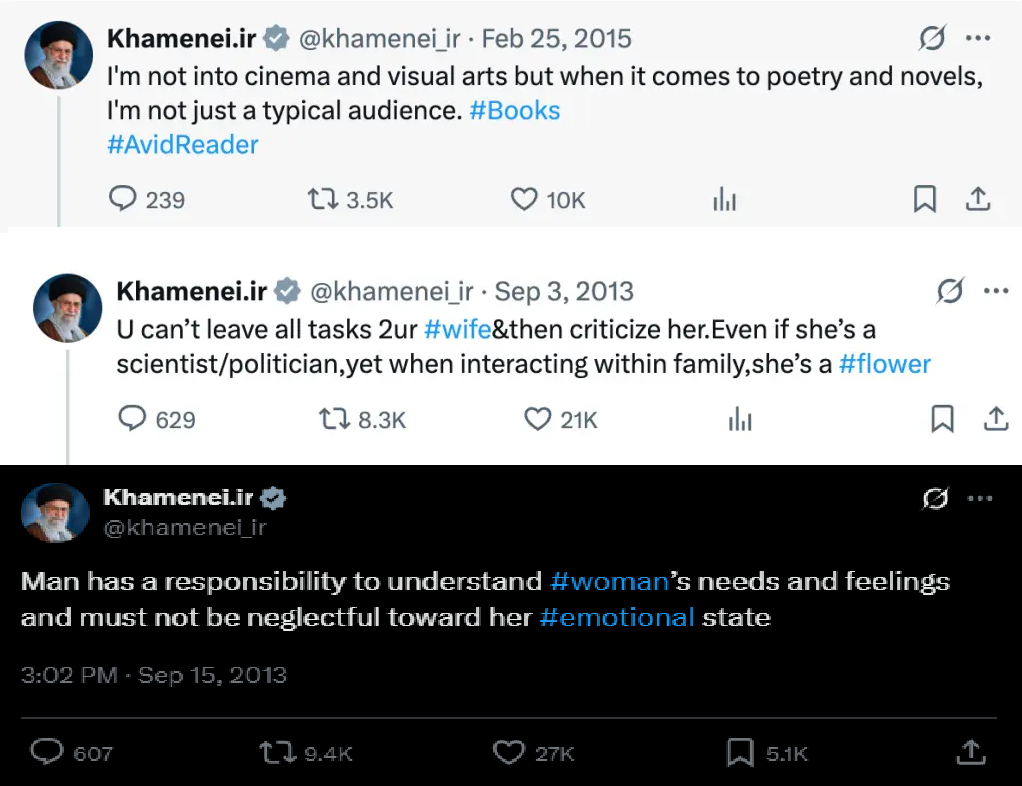
All future jihadist movements1 drew from this same origin. The group which made the Israel-Palestine conflict the cause célèbre of the international Left, Yasser Arafat’s Palestinian Liberation Organization (PLO) sent its militants and intellectuals to post-independence Algeria for ideological and military training. The PLO’s successor organizations, Hamas and Hezbollah, inherited the same network of Leftist fellow travelers in the West. As many poasters discovered during the bombing campaign against Iran earlier this year, even the Ayatollah Khameini’s views are almost indistinguishable from a typical American theatre major.
Even the most notorious Islamist terrorist in history, Osama Bin Laden, was a boilerplate Communist and well connected in Leftist circles. Bin Laden had ties to the PLO and declared that the Palestinian cause inspired the 9/11 attacks, not for reasons of religious devotion, but because of “my desire, and that of the 19 freemen [9/11 hijackers], to stand by the oppressed, and punish the oppressive Jews and their allies.” 2As Curtis Yarvin observed in a recent podcast interview, Bin Laden’s writings are filled with such leftist talking points and Al Qaeda fighters have never found a shortage of high-power lawyers and Harvard professors willing to defend them.
In this context, the “New Left” of the Weather Underground and the Black Panthers looks less like an innovation and more like just another “anti-imperialist” terror campaign. It had its political wing, anti-war protests and the NAACP; its primary issues were the Vietnam War, Palestinian liberation, and “white supremacy”; most essentially, it carried out “an interlocking system of actions—political, economic, psychological, military—that aims at the overthrow of the established authority in a country and its replacement by another regime.”
The world we live in is the caliphate of the Leftist terrorists of the 60s and 70s. They seized their territory (the universities),3 built up formalized networks (NGOs), and took the reins of power in government through the Democrat Party and the permanent bureaucracy. Murderous Weatherman terrorist Bill Ayers had a long successful career as a professor of education at University of Illinois at Chicago, where he mentored Barack Obama, and in 2008 was elected vice president for curriculum studies by the American Educational Research Association; his equally violent wife Bernadine Dohrn (who featured on the FBIs top 10 most wanted list for years) taught at Northwestern University’s law school for 22 years.
The American jihadists of the Boomer Intifada only stopped their campaign of terror because American institutions capitulated to their every demand. After 2016, however, they once again faced resistance. The result: Antifa.
These aged terrorists unleashed their young, discontented students on America, starting with riots at Berkley and culminating with high profile assassinations of Brian Thompson, Donald Trump (attempted), and Charlie Kirk. In other words, the revolution is back on—and we are solidly in the terrorism phase.
The Resistance: America’s Vietminh
We are currently in phase 3 (terrorism) of an insurgency which began with the election of Donald J. Trump to his first presidential term in 2016. This insurgency calls itself “the Resistance,” and boasts adherents within the media, the universities, and the federal bureaucracy, but its militant wing is a collection of organizations united under the banner of “anti-fascism.”
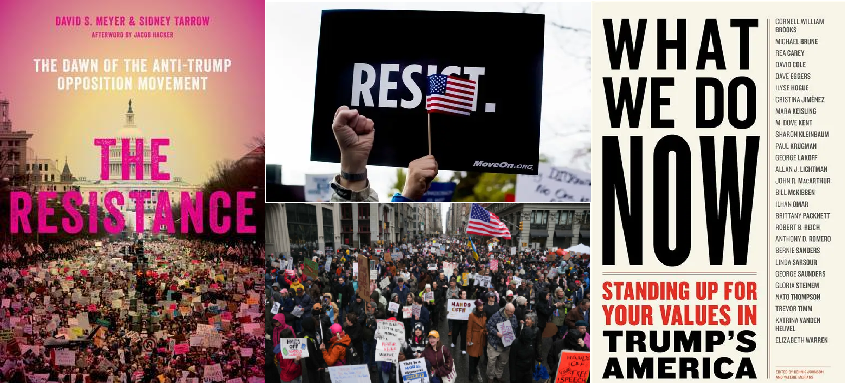
Phase 1, establishing parties, began almost as soon as Trump was elected. It wasn’t a new political party as we understand them in America (the Democrat party serves just fine for that purpose), but new organizations dedicated to a new agenda, or else repurposing old organizations. This was easy and quick, given that “the resistance” inherited a network of sympathetic NGOs that have been built up under the Civil Rights regime (a whole other piece in itself, but Christopher Caldwell’s Age of Entitlement covers it fairly well), but a few new organizations are worth comment.
The most obvious example are the various “Antifa” organizations across the country, along with their even more violent friends, John Brown Gun Clubs. Some of these organizations, like Black Lives Matter, started a few years earlier, but they picked up steam with a clear enemy to fight.
More important, however, is the Democratic Socialists of America. Officially it was founded in 1982, but its current form is an explicit left-wing response to Trump’s election which grew out of Bernie Sanders’ failed campaign. The organization grew from 8,500 members on election day 2016 to 24,000 in 2017, 55,000 in 2018, and 94,000 in 2021. The first DSA members (other than Bernie, a relic of the old revolution of the 60s and 70s) were elected to office at the same time: 15 local officials in 2015, Congresswomen AOC and Rashida Talib in 2018, and over 200 other officials since 2019, with Mamdani being the most recent example.
Phase 2, forming a united front, happened almost simultaneously under the banner of “the resistance.” In a phenomenon often referred to as “intersectionality,” explicitly racialist groups like BLM, various LGBTQ+ organizations, Islamist organizations, and economically focused groups like the DSA all joined forces with establishment Democrat politicians, liberal media figures, Never Trump Republicans, and deep state operatives to subvert Trump’s presidency, obstruct the functions of government, and intimidate his voters, while trying to ensure a Democrat victory in 2020.
There remain, of course, conflicts within this broad coalition; many mainstream Democrats saw more moderate messaging as the key to beating Trump, and threw their support behind perceived moderates like Joe Biden, Mike Bloomberg, Pete Buttigieg, or Amy Klobuchar. However, they never broke ranks in opposing Trump, and when Biden finally emerged victorious, it was as a compromise: the policy agenda he adopted and his key personnel were entirely in the hands of the radicals. These ranks have still not broken, as shown by the widespread, if quiet, refusal to denounce the Left after Charlie Kirk’s murder, with not a single Democrat going further than to condemn violence “on both sides” and blaming Trump.
Phase 3 (terrorism) began within months, and has escalated ever since. In 2017, Antifa organizations burst onto the scene attacking conservative speaking events at Berkeley, seizing control of large parts of the streets of Portland, and doing battle with the Proud Boys. It really hit its stride in 2020 during the outpouring of violence after George Floyd’s fatal overdose, as Antifa streetfighters joined BLM and racially-motivated opportunists to riot, loot, and burn their way across the country, laying siege to ICE facilities and federal courthouses, murdering off-duty cops, and even forcing the White House into lockdown on May 29.
Once they had seized power through the 2020 color revolution, “the resistance” set about using the full force of the law to attempt to prosecute everyone even loosely tied to Trump, ranging from grandmothers who attended election protests in 2021 to Trump’s lawyers to Trump himself. However, even the most hardened leftist judge hesitated to throw a leading presidential candidate in prison on phony charges, so “the resistance” settled on a new plan: assassination.
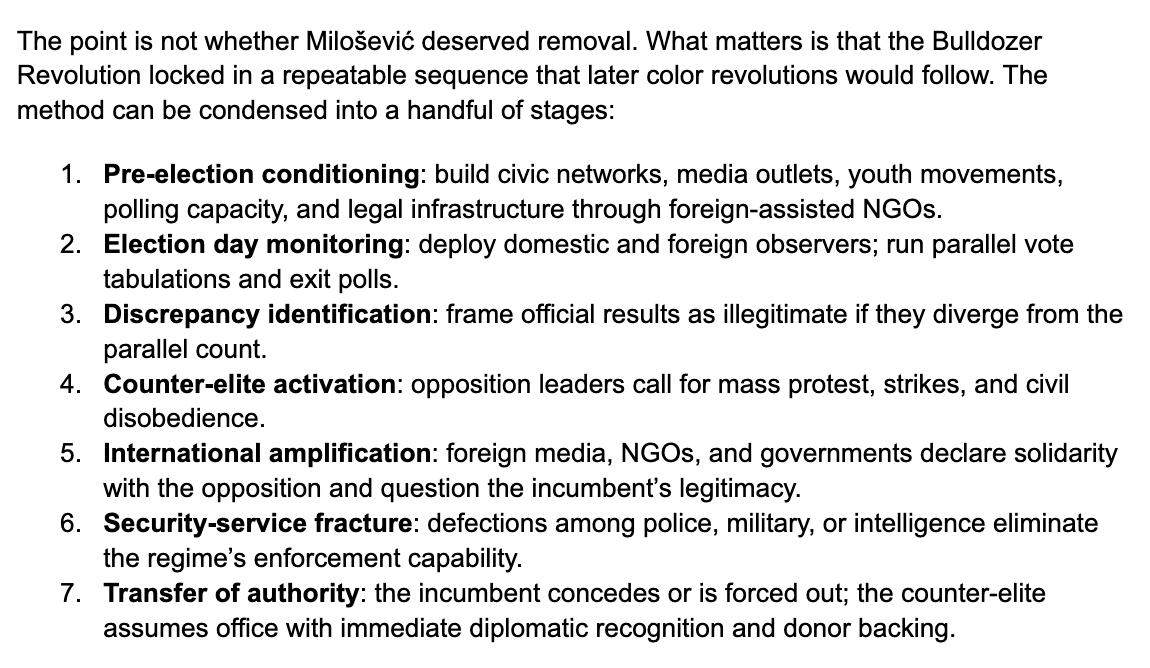
I am not suggesting the attempts to kill Trump were orchestrated by a central figure or organization; the evidence has not yet come out, but it remains possible Crooks was just a psychotic lone wolf. The resistance media, however, had already been putting the idea in its followers’ heads, calling Trump a “fascist” and “Hitler” and, finally in the lead-up to the assassination attempt, such publications as Time Magazine and Financial Times compared Trump to Julius Caesar—all but calling for a modern-day Brutus.
When even this failed, and Trump returned to power with a wide popular mandate, things finally hit their tipping point. Resistance 2.0 is even more energized and convinced of the righteousness of political violence, idolizing as heroes public killers like Luigi Mangione. Charlie Kirk and the children of the Annunciation Catholic School were the first victims, but they will not be the last, and attacks on law enforcement have already become the norm.
The Playbook Against Antifa
When faced with a violent liberation movement, the Right should look to the writings of the man with more experience than any other fighting violent libtards. Trinquier lays out how to cut short the Leftist revolutionary war—and shows what future awaits if we don’t.
The key, as Trinquier says, is to go after the organizations of the terrorist Left. Obviously, things have not escalated to such a degree that using the military to kick doors in the night is politically viable; counterinsurgency is a tricky business, after all. Nor, obviously, would that be desirable, as the point of a counterinsurgency is to maintain order as much as possible. But there are steps that can be taken now, within the normal realm of criminal law.
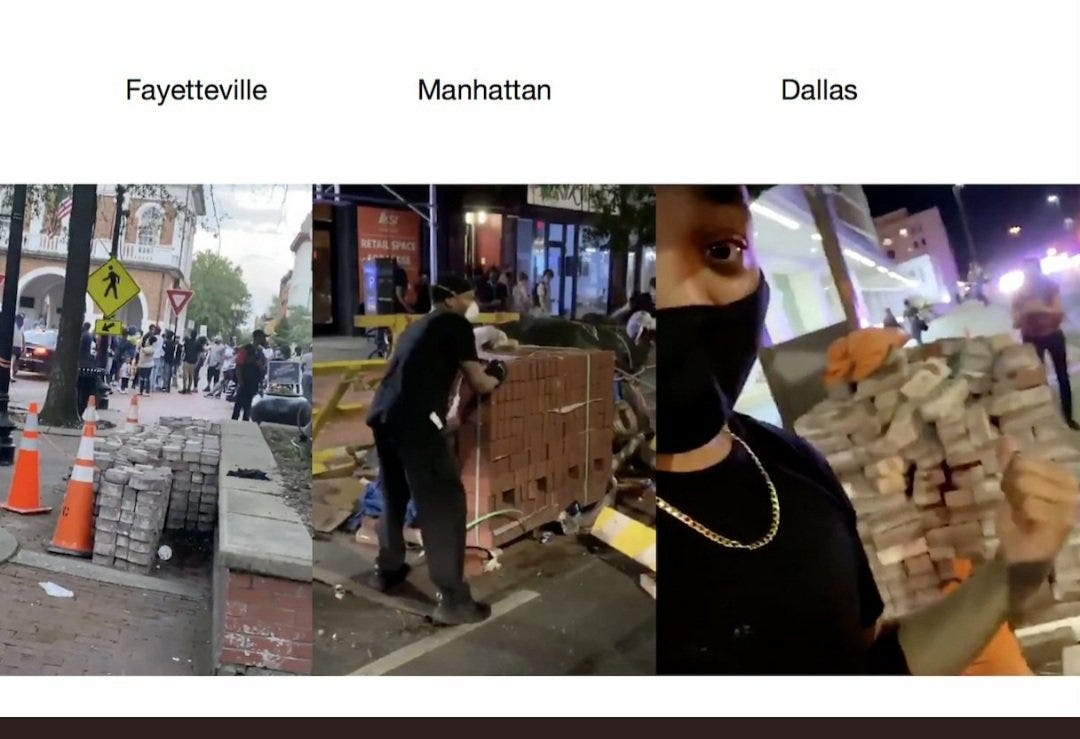
The first step is to roll up the foot soldiers: arrest the killers, of course, but also everyone who obstructs the police, throws a brick through a window, assaults a TPUSA member, vandalizes a federal building, or trespasses in the course of a protest. Do what the left did to J6 protestors, track down people across the country, going back for as many years as the statute of limitations will allow. This is, of course, right and just and good for public order, but more importantly, it makes possible the real strategy: RICO.
If any of these criminals are members of an organization which encourages or enables such behaviors by, for example, buying pallets of bricks, then under the Racketeer Influenced and Corrupt Organizations (RICO) Act, those organizations could be deemed criminal organizations, and every individual who belongs to or funds those organizations would be subject to arrest.4 This would include not just Antifa and JBGC members, but the NGO networks that fund them, if it can be shown that they knew about criminal activities.
Chances are, RICO could do serious damage to Leftist institutions. Most of the people in these organizations are so confident that they will never face consequences that they leave long paper trails of radicalism, as shown by how many posted on social media celebrating Kirk’s death. But not all of them are so careless. Major institutions like the Ford Foundation or George Soros’ Open Society Foundation have armies of lawyers and launder their donations through multiple layers of smaller NGOs, giving them plausible deniability on how those funds are used.
For these institutions, broader but less extreme measures are the only option. Stripping 501(c)3 status should be the first priority, making these foundations (and their fantastic endowments) subject to taxation. Those tied to foreign Antifa groups (now designated Foreign Terrorist Organizations) can and should be subject to even more vigorous sanctions. Those steps alone would be enough to cripple or shutter many of these foundations.
With swift enough action, the insurgent cancer can be crushed before it metastasizes. The question is whether such action can be taken soon and swiftly enough. The deadline may well be November 2026, since Republicans have done poorly without Trump on the ballot and a Democrat House majority will certainly bog down the administration with every method possible. The stakes of the 2028 election will be even higher.
Without such action, the insurgency will proceed. The terrorism will continue to escalate with more riots, more attacks on law enforcement, more school shootings, and more assassinations, until either the left regains absolute power or engages in open guerilla warfare against the forces of order.
If we don’t act quickly, we might soon have to start studying Trinquier in more detail.
ISIS seems to be a weird exception. They recruited some former Al Qaeda fighters, but mostly seemed to draw from ex-Baathist security forces, religious fundamentalists, and run of the mill criminals. Baathism was a Soviet-aligned socialist movement, but didn’t seem to have the same academic leftist ties. As Yarvin has pointed out, ISIS never had the same friends in the West as Al Qaeda. The contrast is stark and telling; exceptions sometimes prove the rule.
As an aside, anti-Israel sentiment on the Left has nothing to do with anti-Semitism, contrary to neocon talking points. Anti-Zionism is just the newest iteration of anti-imperialism and anti-colonialism (a term coined by Palestinian socialist Edward Said); Jews, to the Left, are “giga-whites,” much to the chagrin of many a Jewish Communist.
This is not an exaggeration. On April 19, 1969, eighty armed Black Panthers stormed Willard Straight Hall at Cornell and forced the administration to comply with their list of demands. None were ever punished, leading to the departure of conservative faculty such as Allan Bloom. No college administration ever seriously opposed the Left again.
Trump designating Antifa a “domestic terrorist organization” is a good symbolic action, but unfortunately, it has no definition under law. More interesting is the recent designation of foreign Antifa organizations as Foreign Terrorist Organizations, a term with actual legal ramifications (authorizing drone strikes, for example), but it remains to be seen if domestic Antifa can be connected with them. There are legislative options that could expand these definitions, but given the current political situation, legislative options seem unfeasible.